TOP
Japan - christmas 1 (main)

Christmas / New Year’s Eve / Epiphany in Japan

Christmas / New Year’s Eve / Epiphany in Japan

from 3190 € / per person
(0 Reviews)

Japan

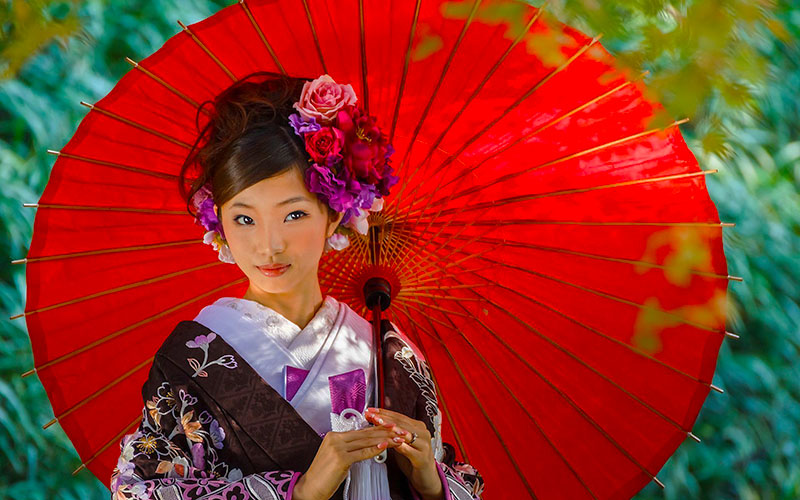
Japan, with the country’s symbol being the “Tori”, the distinctive element of Shintoism, which more than a religion should rather be considered a code of moral rules. The dragon, in addition to being the luckiest zodiac sign, is considered the god of water and the main symbol of Japanese mythology. The “geishas”, who from the tender age of ten are taught how to keep company with the patrons of the “tea houses”, represent the ideal of the cultured woman, with delicate manners and irresistible charm. The country itself will impress you with its natural beauties and ultra-modern cities. The Japanese will surprise you with their love for order and discipline. A truly magical journey to a country that is definitely worth getting to know up close by following the best program on the Greek market!

TOKYO – NIKKO – KAMAKURA – FUJI – HAKONE – LAKE ASHI – KYOTO – NARA – HIROSHIMA – OSAKA

13 Days – Departures:

  • 22 December 2026
  • Departure
    Athens or Thessaloniki
  • Included
    Guided Τours
    Newsletters
    Travel Insurance
    Airplane Tickets
    Half board
    Full Day Cruise
    Transportation by Bus
    Accommodation
    4* Hotel
    Leader
    Insurance
    Excursions - Tours
    VAT
    5* Hotel
    Transfer from and to the Airport
  • Not Included
    Airport Taxes
    Pre-purchase Ticketing
    Snack
    Drinks
    Crew
    Fuel
    Lunch Gift
    Drinks / Soft Drinks Package
    Tips
    Accommodation Tax
    Liability & Professional Liability Insurance
    Tour Operator Insurance
    Activities
    Ferry Tickets
    Transfer from and to the Port
    3* Hotel
    Full Board
    Gala and Shows Night
    Gym
    Port Fees / Taxes
    Swimming Pool
    Dinner
    Breakfast

Tour Plan

1

1st Day

Athens – Tokyo

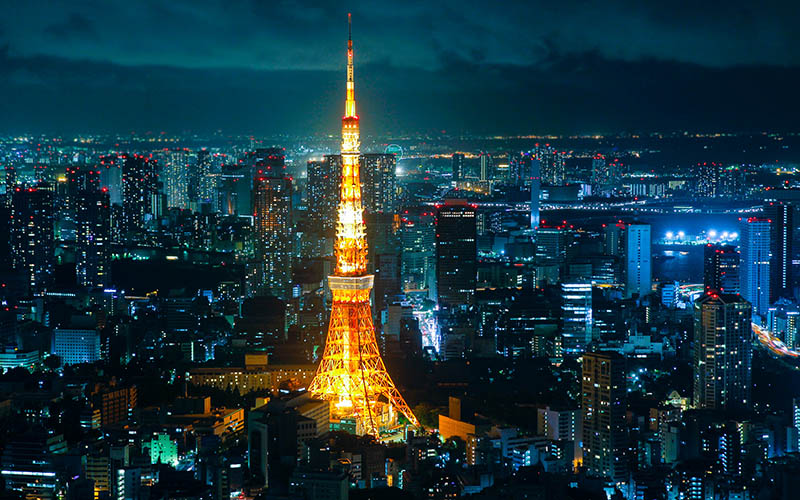
Departure via a stopover for Tokyo, the glittering capital of the “Land of the Rising Sun”. A sparkling metropolis, which from an insignificant 19th century village called Edo, managed to evolve into a model city, not only for Asian but also for global standards. A postmodern and at the same time traditional city, where among the impressive steel architectural creations, corners still manage to be preserved that exude something of the romance, mystery and strict tradition of this special country. Overnight stay.
2

2nd Day

Tokyo (1st guided tour)

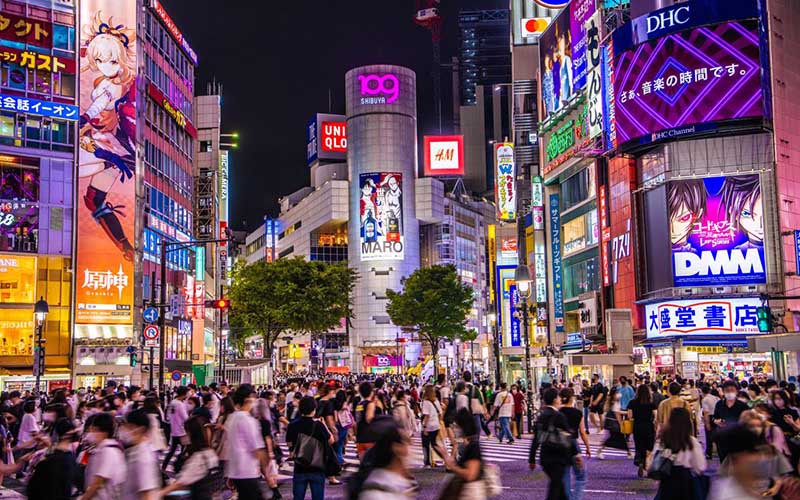
Arrival in the gigantic metropolitan colossus, Tokyo. The first feeling of the passenger who lands at Tokyo International Airport is exactly the same that will accompany him throughout the entire trip: this strange feeling of absolute order, calm and cleanliness that prevails everywhere, a fact unprecedented for one of the busiest airports in the world and the discreet courtesy of government officials, who quickly process the procedures for entering the country, having at their disposal the most advanced technological electronic machines for which Japan is known worldwide. Our tour will begin at the Imperial Palace with its characteristic Japanese gardens. It is not only the official residence of the Japanese emperors, but also the largest green lung in the city. Then we head to the modest Shinto Shrine “Meiji Jegū”, dedicated to Emperor Meiji and his wife Shōken, who in the second half of the 19th century, with a brave act of restoring the central administrative system, transformed Japan from a decadent feudal nation into a leading global power. Construction work on the temple began in 1915 and was completed in 1921, while the surrounding area was shaped into its current form in 1926. The entire complex is a very good opportunity for an introduction to the deeper aspects of Japan’s unique religion, Shintoism. We continue to Shibuya to cross one of the busiest crossroads in the world, where more than three thousand people move simultaneously in all directions in their own unique, Japanese way! The famous Omotesando area with its ultra-modern buildings of high aesthetics and the neighboring Harajuku with its obvious bohemian elements and intense youthful mood, will reveal to us other unknown "corners" of the city. Overnight stay.
3

3rd Day

Tokyo (2nd guided tour)

Tokyo consists of a cluster of urban centers, whose union since the late 19th century has gradually created a colossal giant, with a population that today exceeds thirty million inhabitants! Nevertheless, the city seems compact and orientation is not that difficult. Our acquaintance with Tokyo begins in the traditional Asakusa district with the Sacred Temple dedicated to the deity Kanon. The Nakamise Dori pedestrian street is the best choice for a walk and a mental journey to the interwar period, where the aristocratic class frequented for silk and luxury products! In the remnants of today, the excellent kimonos and items of traditional Japanese clothing, along with souvenirs and snacks in fast food restaurants that the camera lens will love! The next stop will be at the city's National Museum with unique exhibits. Then, walking through the shopping streets of Ginza, the most expensive shopping streets in the world, flooded with haute couture boutiques and atmospheric cafes, we come into contact with the extreme consumerism, but also the love for everything simple and unpretentious that characterizes the Japanese people. Later, we will head to the "Shinjuku" area. This is the liveliest district with the illuminated skyscrapers of the city, we will climb the Tokyo Metropolitan building and from the observation deck. Its reconstruction began in the 1970s and today it is a densely populated commercial and business area, choked with bars and cafes, with neon-lit streets, terrible noise, furious youthful appearances and is the most appropriate point for the visitor to get acquainted with the nightlife of Tokyo. Overnight stay.
4

4th Day

Tokyo – Nikko (full day excursion)

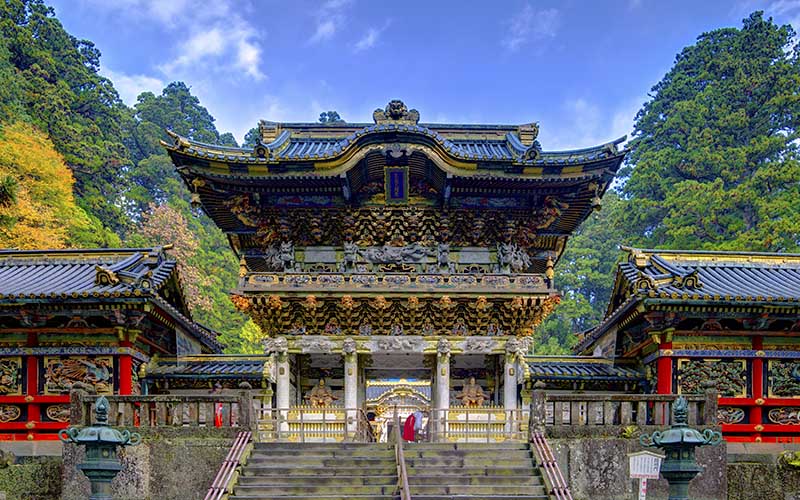
With 103 magnificent buildings, including two Shinto shrines (Tôshôgû and Futarasan-jinja) and a Buddhist temple (Rinnô-ji) on the outskirts of a small town of 17.000 inhabitants, 159 kilometers northeast of Tokyo, in an idyllic landscape that has been designated a National Park of Outstanding Natural Beauty, Nikko is –as the Japanese claim– “the whole of Japan”. The complex, built in the 8th century by the Buddhist priest Shodo and inscribed on the UNESCO World Heritage List (1999), is the resting place of the greatest personality that Japan has ever produced, Tokugawa Ieyasu, and at the same time it declares the love of the Tokugawa dynasty for religion and art. Our tour of the religious places of Nikko will reveal to us the decorative extravagance of the temples that comes in complete contrast to the simple appearance of the traditional buildings of Japan, will introduce us to the hidden pages of the history of the country's most famous dynasty and will offer us moments of peace and tranquility in a landscape of special natural beauty. Starting from the red arched Shink-yo bridge, over the Daiya River and walking around the wonderfully decorated sacred buildings with reliefs, depictions of animals and birds, we come into contact with the most golden pages of Japan's history. Then we head towards the mountainous Lake Chuzenji, enjoying the magnificent landscape that surrounds it. Finally, after a stop to photograph the rushing Kegon Waterfall (including the elevator), whose waterfall reaches 97 meters, we will depart for Tokyo, where we will arrive late in the afternoon. Overnight stay.
5

5th Day

Tokyo – Kamakura (full day excursion)

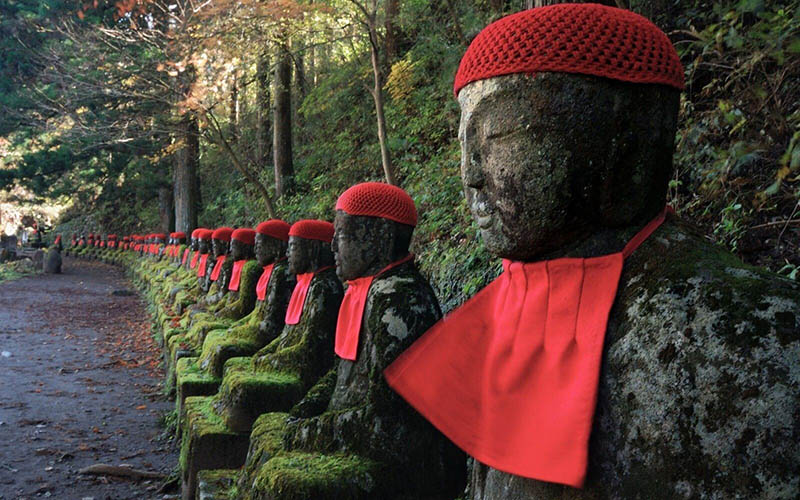
Today we have a full-day excursion by train to the beautiful seaside city of Kamakura, one of the most beautiful in Japan. The Kamakura shogunate (1185-1333), founded by Yoritomo, leader of the Minamoto clan, had gained great power and was one of the most powerful during the turbulent medieval times. It was decided to move the new capital here and thus the previously insignificant small town experienced a period of glory and grandeur. Proof, the largest bronze outdoor statue of Amida Buddha (Kotoku in) from the 13th century, 13,35 meters high. This is the first attraction to which our steps will lead us. Our walking tour will continue at Tsurugaoka Hachimangu with its thousands of votive lanterns and colorful statues of the beloved deity Jijo, one of the most beautiful Shinto temples and the most important shrine in Kamakura, while the next Hase Dera temple we will visit, dedicated to the beloved Goddess of Mercy Kannon, is considered the most visited place of worship in Japan. Finally, our walk along the picturesque Komachi-Dori shopping street with its wooden houses, picturesque shops and traditional restaurants reveals the market rich in traditional products of this very interesting historical city. Return to Tokyo and overnight stay.
6

6th Day

Tokyo – Fuji – Hakone – Cruise on Lake Ashi – Kyoto (bullet train)

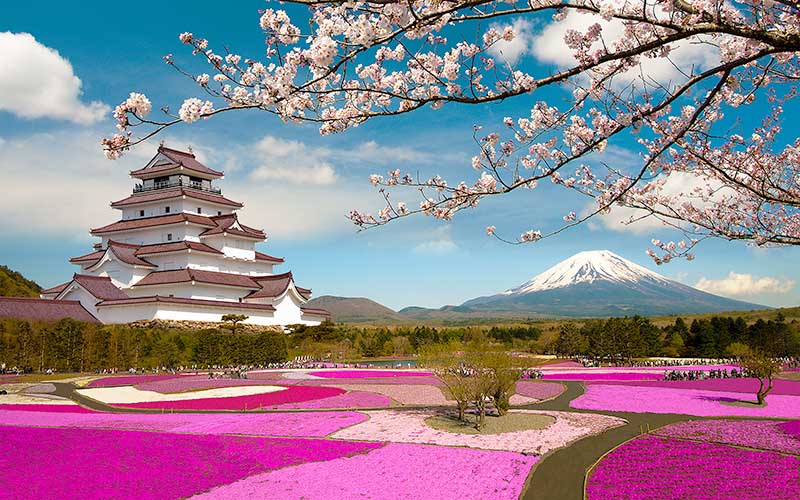
“Never say beautiful, unless you have first seen Fuji” tells us an ancient Japanese proverb and through this sentence the parallel course of the Nation with the monumental volcanic symmetrical cone of Fuji is declared. It dominates at 3.776 meters and has been “sleeping” since 1707, when the last eruption took place. It is the ultimate symbol of Japan, worshipped as a god and has been a magnet for both believers and tourists. Although some geologists are concerned about its activity, fearing a new eruption, Mount Fuji fascinates in a unique way to this day. On sunny days, the view from Hakone, at an altitude of 2.300 meters, is magnificent. On today's excursion, our approach to the 5th station will help us enjoy the volume and grandeur of the snow-capped Fuji and understand the reasons why so many poems have been written and so many paintings have been painted on this subject. Fuji is part of a huge, organized National Park, Izu-Fuji-Hakone, which includes five mountain lakes of incredible clarity, many therapeutic complexes and luxurious hotel facilities, while due to its proximity to Tokyo, it is the closest escape point for residents of the capital for daily excursions. A short cruise on the crystal-blue Lake Ashi with a view of the central Alps mountain range will close our day in a dreamlike way. Immediately afterwards we go to the train station, from where we will board the bullet train to Kyoto. Overnight stay. (take with you the essentials in a small suitcase, our luggage will arrive at our hotel the next day).
7

7th Day

Kyoto (1st guided tour)

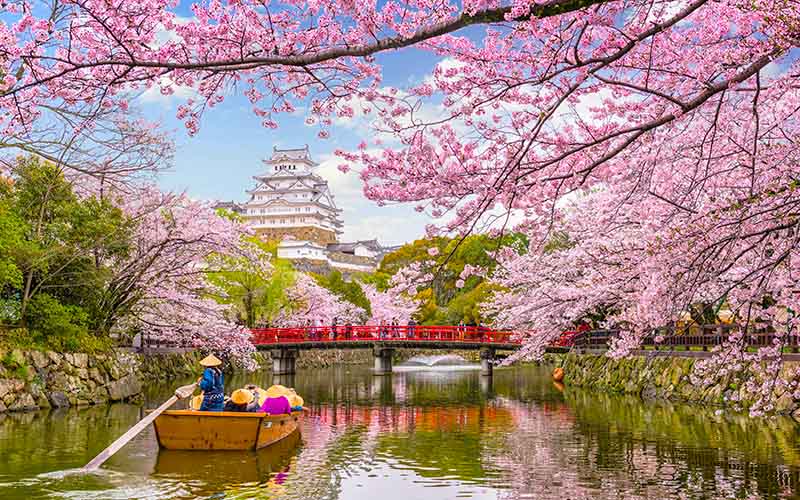
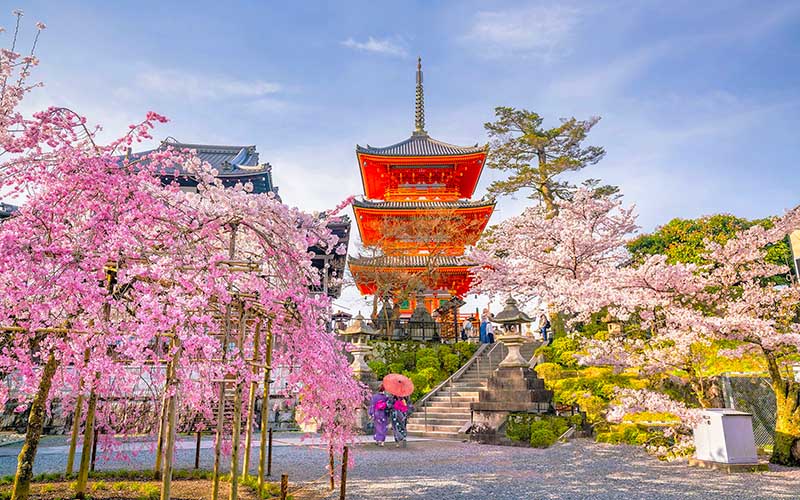
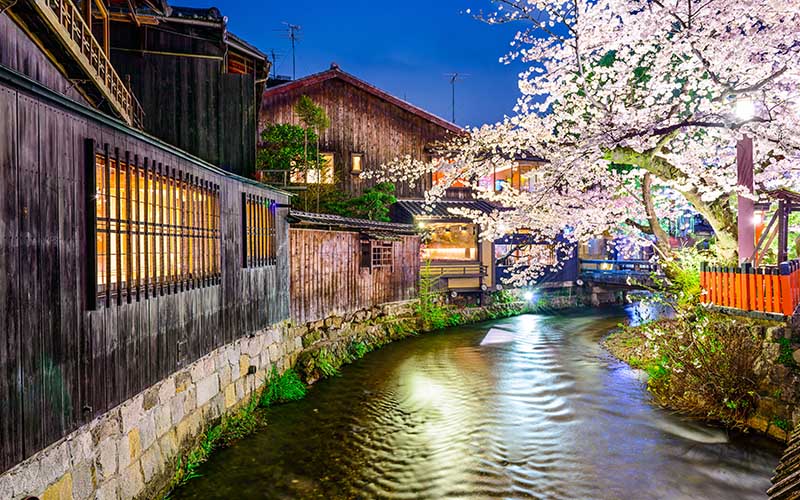
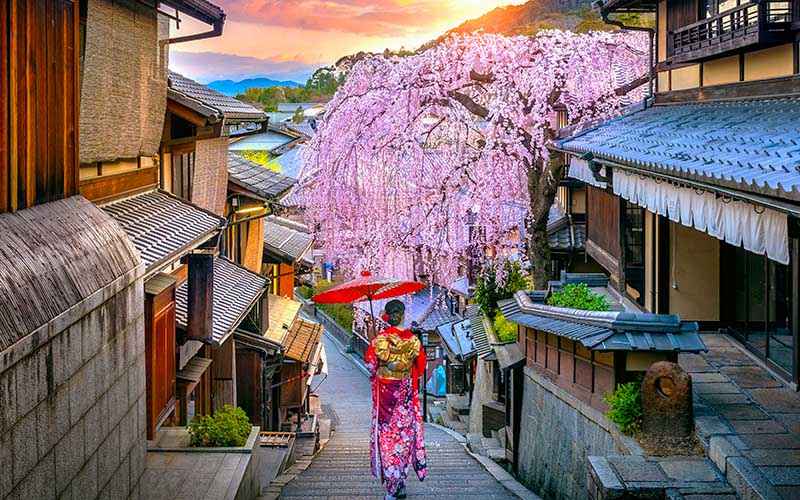
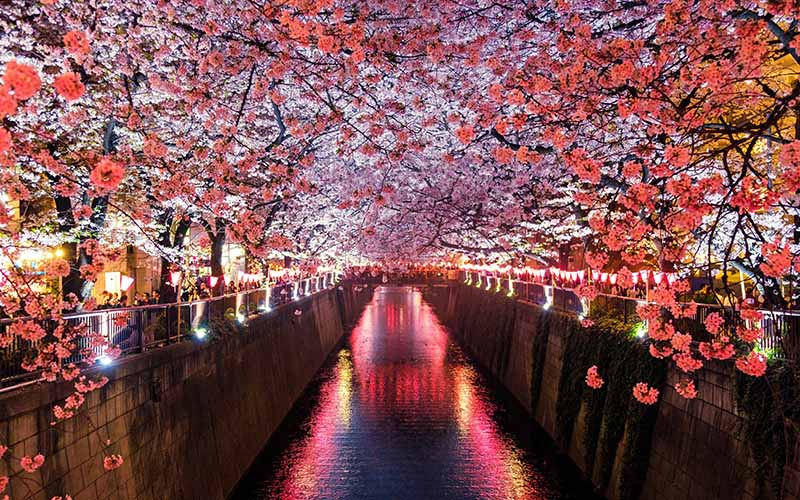
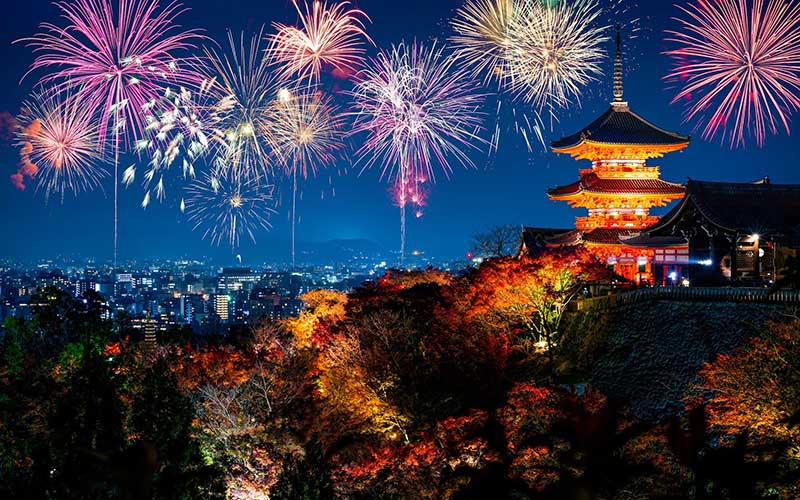
Kyoto is the most historic and at the same time the most elegant city in Japan. A trip to Kyoto is equivalent to a tour of 11 centuries of Japanese history. It is the “real capital” of this strange country. Traditions, religion, aesthetics, art were born here. The blooming Kyoto of cherry blossoms and refined gardens maintains its color and authenticity unchanged, refusing to capitulate to the future. If someone wants to know the true heart of Japan, they must definitely find themselves in Kyoto. Since 794 it has been the first capital of the Japanese Nation under the name Heiankyō. It was later renamed Kyoto, which means “First City” and remained the capital of Japan until 1868. However, it never lost its scepter in the consciousness of the Japanese, as the center of their psyche. It is so beautiful that in World War II the Allied forces did not bomb it, recognizing its cultural value. The city is home to a huge number of treasures and it is estimated that over 20% of all works of art in Japan are located in Kyoto. A city with more than 1.700 Buddhist temples and more than 300 Shinto shrines. Here the visitor understands that geishas, ​​kimono, samurai and sumo wrestlers are not a thing of the past. The day begins at Nijo Castle, the former residence of the Tokugawa shoguns. The garden, with its ponds and stone bridges, is ideal for photos. Next, we will head to Heian Jingu Shrine, known for its majestic orange Torii gate. A walk through the garden, among ponds, bridges and cherry trees, is a moment of inner peace. In the heart of the city, we will take part in a traditional tea ceremony. Seated on tatami, you watch the quiet, ritualistic movements of the host. Bitter matcha and sweet wagashi balance the taste and experience. Later, we will be transferred to Yasaka Shrine, on the edge of the Gion district. The shrine is active, with locals praying, making wishes and stopping by for a moment of tranquility. The lanterns and wooden buildings create an almost theatrical atmosphere. Our walk ends in the streets of Gion, the most famous traditional district. The wooden machiya (traditional houses), the quiet streets and the possibility of seeing a maiko (apprentice geisha) create the feeling that you have slipped into another era. Overnight stay.
8

8th Day

Kyoto (2nd guided tour)

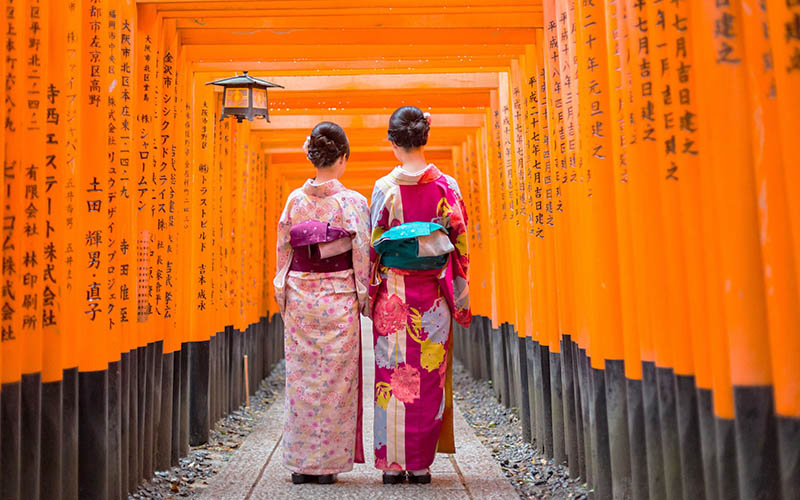
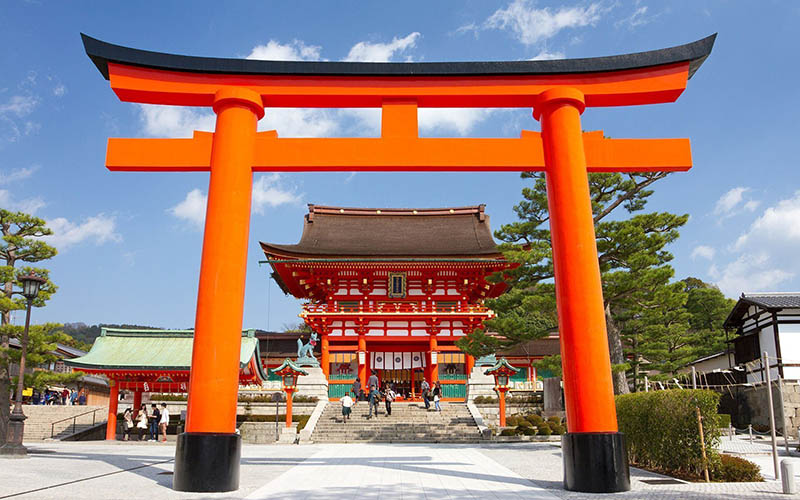
Our full-day guided tour will begin with the magnificent Bamboo Forest. The orange-colored Heian Shrine (1895), dedicated to Emperors Kammu (737-806) and Komei (1831-1867), is our next stop, while the Sanjusangento Shrine (1164) with its 1,001 statues of the Goddess of Mercy Kannon, will impress us with its size. Next is the incomparable Golden Pavilion, the most famous attraction in the northern suburbs of the city, which was the summer villa of the shogun Ashikaga Yoshimitsu and which was converted into a Zen shrine after his death in 1408. We will continue to the Fushimi Inari Shinto shrine dedicated to the eponymous rice deity, with its labyrinthine enclosed paths covered entirely by tree trunks. In the afternoon with your leader you can visit the postmodern building of the train station or walk the "Philosopher's Path", which will reveal to you the Kyoto of the margins, off the beaten tourist track. For the evening, a walk through the Gion area, the traditional Geisha district and today the center of nightlife, is the best way to close our acquaintance with the stately city. Overnight stay.
9

9th Day

Kyoto – Nara – Osaka

Nara, the capital of the province of the same name in the Kansai region, is today a small, picturesque and quiet city with a long and dynamic past. Although it was the capital for a very short time (710-784) under the name Heijo, the Buddhist presence and the power of the monks were considered great threats and forced the government to move the capital to Nagaoka in 784. However, some of the most impressive Buddhist shrines that we will see today on our tour remained on its territory. What one realizes, leaving the central train station, is that modern Nara is in no way inferior to the rest of the Japanese provincial cities. Well-designed streets, beautiful small shops, atmospheric restaurants and modernly dressed residents, hurrying about their work, are the first images that the visitor receives. Just a few steps further and suddenly a vast park spreads out in front. It is the city's namesake park, which took its current form in 1880. And as you walk along, the landscape fills with deer. So accustomed to human presence that you play with them, feed them and take pictures. More than twelve hundred deer roam freely in Nara Park. According to mythology, one of the four gods of Kasuga Temple, Takenomikazuchi-no-mikoto, appeared on a white deer to protect the city from famine, and since then the deer have become the messengers of the gods. Until 1637, the punishment for killing a deer was the death penalty. Today, deer are considered National Treasures. The visit to the historical monuments will begin at the Todai-ji Temple, which houses the enormous bronze statue of Daibutsu (Great Buddha), 16 meters high. This temple, which loosely translates to "Great Eastern Shrine", was built in 752 as the administrative center of all the Buddhist temples in the Nara region. This is followed by a visit to the Shinto shrine Kasuga Taisha, a favorite altar of the powerful Fujiwara family, who ruled the region during the Nara and Heian periods. The temple is full of votive bronze lanterns, which when illuminated at night, give the landscape an otherworldly image. With a walk in Naramachi, a former merchant neighborhood with traditional wooden houses and small rock gardens, we close our visit to charming Nara. Then we depart and end up in the “Economic Dragon of Japan”, Osaka, the second largest city in the country. After visiting the Umeda area, with its oversized futuristic buildings, the climb to the Umeda Sky Building, the 19th tallest building in the Osaka region, consisting of two 40-story towers connected to each other, housing many offices of multinational companies and the 360-degree view from the top floor will take our breath away and reveal what is described as a "Japanese miracle". Overnight stay.
10

10th Day

Osaka – Hiroshima – Osaka (bullet train)

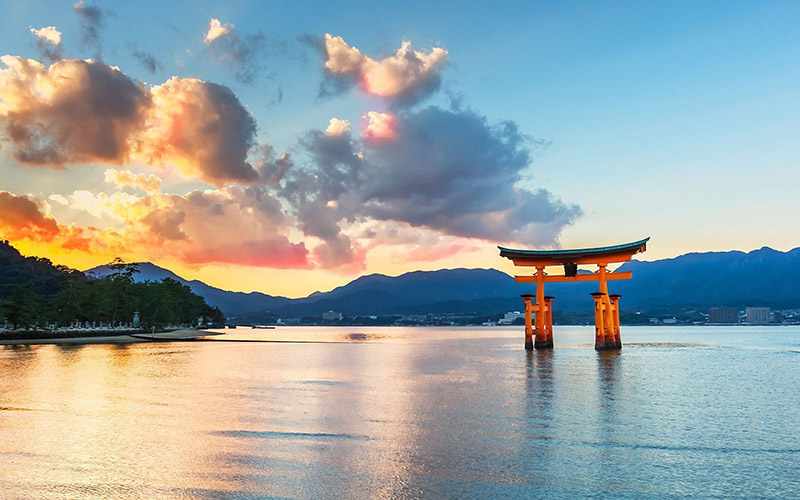
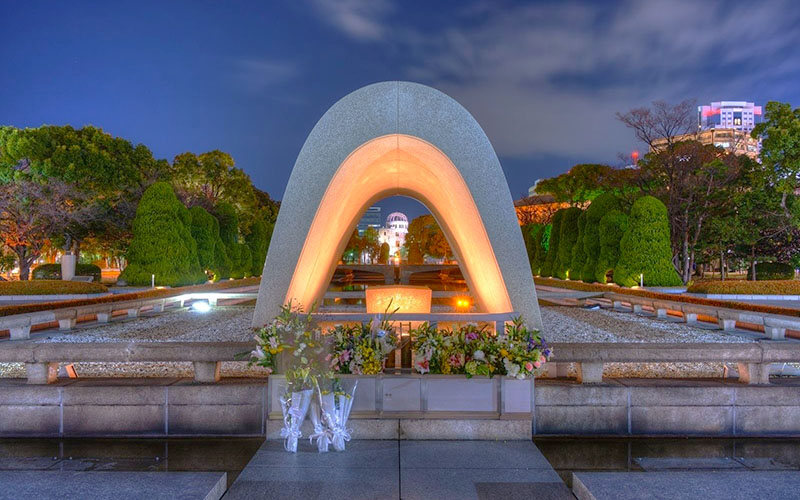
We board the bullet train again this morning heading for the martyred Hiroshima. The city whose inhabitants experienced the tragedy and nightmare of the dropping of the atomic bomb in the last days of World War II, but which the Japanese stubbornness managed in a very short period of time to transform into a modern residential model with beautiful parks, impressive buildings, multi-thematic educational and cultural institutes and an extremely interesting market. Upon arrival, we will first go to the sacred island of Miyajima and the much-photographed Itsukushima gate. This is the most characteristic sea gate (Tori) of Japan, the absolute symbol of Shinto culture. With a height of 16,8 meters, red as fire, it stands proudly in the sea, while it can be approached on foot from the beach, depending of course on the height of the tide level. The gate was built in the 6th century and in 1996 it was registered as a UNESCO World Heritage Site. Lunch at a local restaurant and return to Hiroshima and the tour continues at the Peace Park, with the only building left standing, right next to the point where the atomic bomb exploded, on the morning of 6th August of 1945, standing scarred by sad memories, the cenotaph of the thousands of victims of the nightmarish war, the Eternal Flame, the Peace Bell and the museum with photographs, audiovisual material and exhibits from that deadly day. Transfer to the train station and boarding the bullet train to Osaka. Overnight stay.
11

11th Day

Osaka

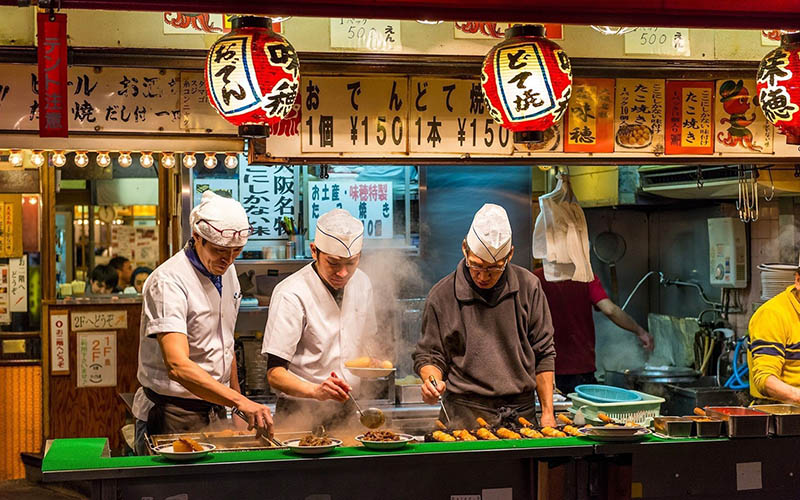
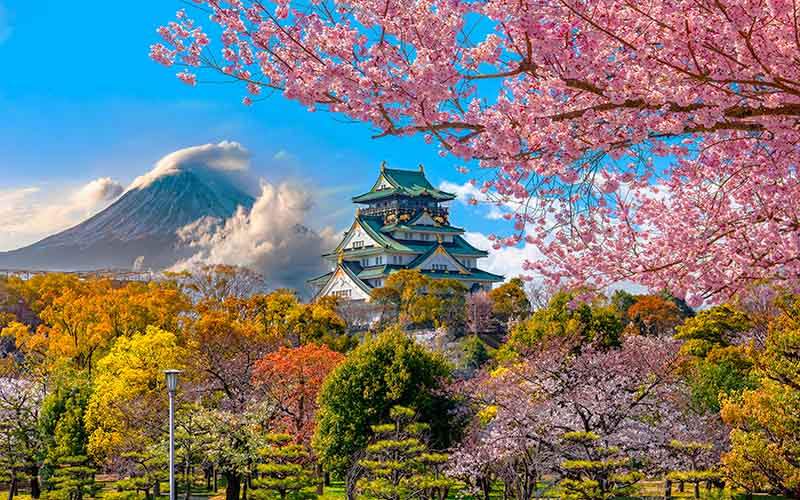
Our tour today will bring us into contact with one of the most important manufacturing and commercial ports in the world: Osaka. If Tokyo is considered the spiritual and cultural center of the country, Osaka is the central core of all economic and business activities in the country. Built on the delta of the Yodo River, with one of the most modern and busiest airports in the world, it is the second, in terms of number of visitors, gateway to the country. The official translation of the name Osaka is "Great Hill". The history of the city dates back to the Kofun period (250-538 AD). Naniwazu, as the old name of the port was, was for centuries the main entrance for visitors from Korea and China. Although Osaka may never have achieved the grandeur of other imperial cities, it cannot be overlooked that it was one of the country's first capitals and, for a long time, the most important economic center in Japan. During the Edo period (1603-1867), the city developed rapidly. And of course, beyond the economic sector, it is also culturally rich, as it is closely linked to the traditional art of woodblock printing, which is extremely widespread in Japan, and has a vibrant artistic life, as evidenced by the numerous "Bunraku" and "Kabuki" theaters. Getting to know Osaka always begins with a visit to its famous Castle (for photos outside), which is located in the center of the city and is considered one of the most famous and best preserved in Japan. Although it is essentially a copy of the original (the original burned down three times during its history), even today it still impresses with its volume, its exterior decoration with gold leaf and its lush green surroundings. Its construction began in 1583 by Hideyoshi Toyotomi and was completed in 1597. We will end up in the Dotonbori area, where the commercial heart of Osaka beats, with hundreds of shops, restaurants and a vibrant nightlife. The next stop is Shitennoji Temple, one of the oldest temples in Japan, consecrated in 593 by Prince Shotoku. It holds the distinction of being the first temple built to introduce Buddhism to Japan. Overnight stay.
12

12th Day

Osaka – Athens

Breakfast and free time until noon for our return flight to Greece.
13

13th Day

Athens

Arrival in Athens.

Tour Location

Japan

Japan, with the country's symbol being the “Tori”, the distinctive element of Shintoism, which more than a religion should rather be considered a code of moral rules. The dragon, in addition to being the luckiest zodiac sign, is considered the god of water and the main symbol of Japanese mythology. The "geishas", who from the tender age of ten are taught how to keep company with the patrons of the “tea houses”, represent the ideal of the cultured woman, with delicate manners and irresistible charm. The country itself will impress you with its natural beauties and ultra-modern cities. The Japanese will surprise you with their love for order and discipline. A truly magical journey to a country that is definitely worth getting to know up close by following the best program on the Greek market!

Price list

 
13 days
Departures: 22 December 2026
Price per person
4* and 5* HOTELS
13 days:
22 December 2026
Double 3.190 €
3rd person up to 12 years old -
Single 4.110 €
 

Flights with Juneyao Airlines:

  • Athens – Shanghai: 13:20 (departure) – 05:15 (arrival).
  • Shanghai – Tokyo: 08:20 (departure) – 12:00 (arrival).
  • Osaka – Shanghai: 22:10 (departure) – 23:30 (arrival).
  • Shanghai – Athens: 01:10 (departure) – 07:35 (arrival).
 

Included

  • Airplane tickets ATHENS – SHANGHAI – TOKYO & OSAKA – SHANGHAI – ATHENS with Juneyao Airlines.
  • 4*, 4* (Superior) and 5*hotels.
  • Half board daily.
  • Transfers, transportation as indicated in the program.
  • Entrance fees during the tours to all places visited according to the program.
  • Tours by qualified tour guides according to the program.
  • Experienced Greek tour leader – guide throughout the trip.
  • Travel folder with useful information.
  • Liability insurance.
  • VAT.
 

Not included

  • Airport taxes and fuel surcharges: 1.090 €.
  • Everything that is mentioned as optional or proposed, and everything that is not explicitly mentioned in the included.
 

Notes

  • On the day of the transfer from Tokyo to Kyoto, your suitcases will be transported by coach, and you will find them at your hotel. Please carry only the essentials with you.
  • The program flow may vary without omitting anything.
  • Hotel categories in Japan are not like those in Europe, rooms are usually smaller.
  • Most hotels in Japan offer rooms with two single beds.
  • Rooms with a double bed are available only upon request, subject to availability, and may incur an additional charge.
  • Your passport with a validity of 6 months from the date of departure from the destination country and a color photocopy of it are required.
  • Our trips are accompanied by the most experienced tour leaders in the Greek market, possessing deep knowledge of the destinations and a genuine passion for the traveler. However, in some instances, your tour leader may meet you at the destination itself, given the frequent departures of our trips.
  • The trip information dossier—containing details on flights, hotels, weather conditions, and practical matters such as recommended clothing, electrical standards, currency, and any special equipment—is prepared no later than one week prior to departure and sent to travelers electronically. Your dedicated travel consultant remains at your disposal for any information you may require. You will receive the printed dossier containing all these details at the airport from our representative or your tour leader.
  • Flight seats for our trips are secured through group bookings, which are prepaid and reserved months in advance to ensure the best possible price for your journey. However, with this type of group booking, tickets are issued just 1–2 days before departure; while requests for specific seats (aisle, window, etc.) are conveyed to the respective airlines, these requests are not binding. Therefore, although we convey this request to the airline, there is no guarantee it will be fulfilled. For group bookings, most airlines do not permit seat pre-selection and apply surcharges based on the route and aircraft occupancy.
  • For every group trip, we provide all travelers with complimentary individual travel insurance, featuring specific benefits and coverage for designated situations. Galea Travel covers the insurance premium cost; however, the terms, procedures, and required documentation are determined by the insurance company itself. In any event, the traveler must initially cover any expenses, subsequently submitting the relevant receipts, medical reports, etc. (which must be in English) to the insurance company upon returning to Greece.